

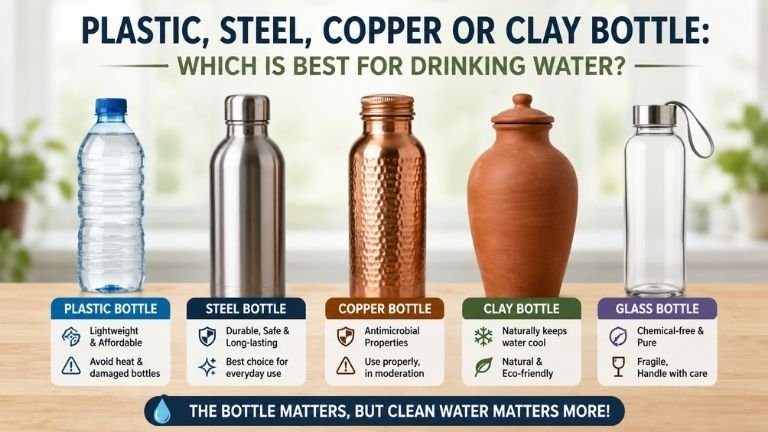
Water is one of the most important things our body needs every day. While most people focus on drinking enough water, many often overlook another important question: What type of bottle or container should we use to store and drink water or Plastic, Steel, Copper or Clay Bottle: Which Is Best for Drinking Water?
Today, water bottles are available in different materials, including plastic, stainless steel, copper and clay. Each type has its own advantages and disadvantages. Some people prefer copper bottles because of traditional practices, while others choose steel bottles for convenience. Clay bottles are popular for naturally cooling water, and plastic bottles remain common because they are lightweight and affordable.
But which one is actually better for everyday use?
Let us look at the different types of water bottles and understand which option may be the most practical and safe for daily drinking.
1. Stainless Steel Bottle
For everyday use, a good-quality food-grade stainless steel bottle is one of the most practical choices.
Stainless steel bottles are generally durable, reusable and easy to carry. They do not break easily like glass or clay containers, making them suitable for work, travel, school and outdoor activities.
A major advantage is that a high-quality stainless steel bottle can be used repeatedly for a long time. However, the quality of the bottle matters. It is better to choose a bottle specifically designed for storing drinking water and made from food-grade materials.
Regular cleaning is also important. Even a good-quality bottle can develop unpleasant smells or bacterial buildup if it is not washed properly.
Best for: Everyday water storage, office, travel and regular use.
2. Plastic Water Bottle
Plastic bottles are popular because they are lightweight, inexpensive and easy to carry. However, not all plastic bottles are designed for repeated use.
When buying a reusable plastic bottle, check whether it is specifically made for food and beverage storage. Avoid using damaged, cracked or heavily scratched bottles for a long period.
It is also better not to expose plastic bottles to high temperatures unnecessarily. Heat can affect some types of plastic and may increase the migration of certain substances into food or beverages.
Single-use plastic bottles are also not ideal as permanent reusable water bottles. If you want a reusable plastic bottle, choose one designed for repeated use and follow the manufacturer’s instructions.
Best for: Lightweight and convenient use when a suitable reusable, food-grade bottle is chosen.
3. Copper Bottle
Copper bottles have been used traditionally in India for storing water. Copper is known to have antimicrobial properties, and research has investigated its ability to reduce certain microorganisms in water.
However, this does not mean that drinking water from a copper bottle automatically makes it healthier than water stored in other safe containers.
Excessive exposure to copper can be harmful. For this reason, a copper bottle should be used appropriately rather than assuming that more copper is better for health.
It is also important to follow the manufacturer’s instructions regarding how long water should be stored in the bottle. Copper bottles require proper cleaning and maintenance.
Another important point is that copper containers are not suitable for storing every type of beverage. Acidic drinks should generally not be stored in unlined copper containers because they can react with copper.
Best for: People who prefer copper storage as part of their traditional routine, when used appropriately.
4. Clay or Earthen Bottle
Clay bottles and traditional earthen pots are another interesting option. One of their biggest advantages is that they can help keep water naturally cool through evaporation.
For people who enjoy naturally cool drinking water without refrigeration, a properly made clay container can be a useful choice.
However, clay containers require more care than stainless steel bottles. They can break easily, and cleaning may be more difficult depending on their design and surface.
It is important to choose a clay bottle that is made specifically for drinking-water storage and is produced using food-safe materials. The container should also be kept clean and allowed to dry properly.
Best for: Naturally cool water and people who prefer traditional, natural materials.

So, Which Water Bottle Is Best for Health?
There is no single bottle material that is universally “the healthiest” for everyone.
For most people, a high-quality food-grade stainless steel bottle is a practical choice for everyday drinking water because it is durable, reusable and relatively easy to maintain.
A properly made clay container can also be a good option if you prefer naturally cool water and are willing to maintain it carefully.
Copper bottles can be used appropriately, but they should not be treated as a cure-all or as automatically healthier than other safe containers.
Plastic bottles can also be suitable when they are specifically designed for repeated food and beverage use and are maintained according to the manufacturer’s instructions.
The Bottle Is Not the Only Important Factor
Regardless of the material you choose, cleanliness is extremely important.
A bottle that is not washed regularly can become a place where microorganisms grow. Pay particular attention to the mouthpiece, cap, threads and areas that are difficult to clean.
Wash the bottle regularly with appropriate soap and water, rinse it properly and allow it to dry. If the bottle develops cracks, damage, unusual smells or signs of deterioration, consider replacing it.
You should also avoid sharing drinking bottles when possible, particularly when hygiene is a concern.
Most importantly, the quality of the water itself matters far more than simply changing the bottle material. Drinking safe, clean water and maintaining good hydration are fundamental to health.
Summary:
If you are looking for one practical option for everyday use, a good-quality food-grade stainless steel bottle is a strong choice.
Clay bottles can be considered if you prefer naturally cool water, while copper bottles can be used appropriately as part of a traditional routine. Reusable plastic bottles can also be convenient when you choose a suitable food-grade product and avoid excessive heat or prolonged use of damaged bottles.
Ultimately, the best bottle is one that is safe, clean, suitable for drinking water and properly maintained.
So, instead of focusing only on whether the bottle is made from plastic, steel, copper or clay, pay attention to the quality of the material, how you use it, and how regularly you clean it.
Also Read : https://daytodaynews.net/latest-mobile-sim-rules-and-technology-ai-offers-on-28th-aug/
1 thought on “Plastic Steel Copper or Clay Bottle: Which Is Best for Drinking Water?1”