

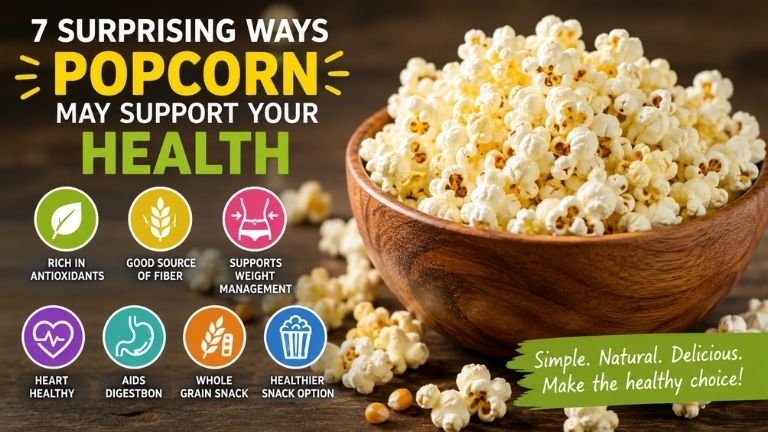
When you think of popcorn, you may immediately picture a movie theatre, a large tub of buttery popcorn and a soft drink. But popcorn itself is not necessarily an unhealthy snack. In fact, plain popcorn is a whole-grain food that can provide fiber, antioxidants and other beneficial plant compounds.
7 Surprising Ways Snacking on Popcorn: The biggest difference comes down to how it is prepared. Air-popped or lightly prepared popcorn can be a relatively nutritious snack, while versions covered in butter, caramel, sugar or excessive salt can turn it into a much more calorie-dense treat.
So, what happens when you make popcorn part of your snack routine? Here are seven interesting ways popcorn may support a healthier diet.
1. Popcorn Is a Whole-Grain Food
One of the most overlooked facts about popcorn is that it is a whole grain.
Unlike refined grains, whole grains contain the bran, germ and endosperm. These parts provide a combination of nutrients and plant compounds that can contribute to a balanced diet.
Adding whole-grain foods to your meals and snacks is one simple way to improve the overall quality of your diet. Popcorn can be an easy option because it is convenient, inexpensive and naturally crunchy.
Of course, eating popcorn does not automatically make your diet healthy. What you add to it still matters.
2. It Can Give You a Useful Amount of Fiber
Popcorn is also known for its dietary fiber content. Fiber is important for normal digestion and can help you feel satisfied after eating.
A snack with fiber may be more filling than many highly processed snacks that contain little fiber. This can be particularly useful if you often find yourself reaching for another snack shortly after eating.
The amount of fiber you get depends on the portion size and the rest of your diet, but choosing popcorn instead of a low-fiber snack can be one small way to increase your daily fiber intake.
3. Popcorn Contains Antioxidants
Here’s a fact many people may not expect: popcorn contains polyphenols, naturally occurring plant compounds with antioxidant properties.
Antioxidants help protect cells from oxidative damage caused by free radicals. Popcorn’s polyphenol content is one reason researchers have taken an interest in its potential nutritional value.
However, popcorn should not be viewed as a magic antioxidant food. A varied diet containing fruits, vegetables, whole grains, nuts and legumes remains the better approach to getting a wide range of beneficial plant compounds.
4. It Can Be a Smart Snack for Weight Management
If you’re trying to manage your calorie intake, popcorn can be a useful snack because it has a large volume relative to its calorie content, particularly when it is air-popped and prepared without heavy toppings.
That means you can get a satisfying bowl of crunchy food without necessarily consuming the amount of calories found in many calorie-dense snacks.
But there’s an important catch.
A bowl of plain popcorn and a bucket of popcorn loaded with butter and other toppings are nutritionally very different. Large amounts of oil, butter, caramel or cheese-flavored coatings can dramatically increase the calorie content.
So, the preparation method matters almost as much as the popcorn itself.
5. It Can Help Satisfy Your Craving for Something Crunchy
Sometimes hunger isn’t the only reason we snack. We may simply want something salty, crunchy or enjoyable to eat.
Popcorn can satisfy that crunchy-snack craving while also providing whole grains and fiber. This makes it an interesting alternative to some heavily processed snack foods.
Try seasoning homemade popcorn with herbs, spices, black pepper, paprika or a small amount of salt instead of relying on large quantities of butter or commercial flavoring.
A simple change in preparation can make your regular snack much more balanced.
6. Homemade Popcorn Gives You More Control
Making popcorn at home has another major advantage: you control what goes into it.
You can choose the type and amount of oil, control the salt and avoid excessive sugary or buttery toppings. For example, you can prepare popcorn using a small amount of olive oil and add your preferred herbs or spices.
This doesn’t mean olive oil magically makes popcorn healthy, but using a moderate amount of a plant-based oil can be a practical alternative to loading your snack with butter.
Homemade popcorn also makes it easier to control portion sizes.
7. Movie-Theatre Popcorn Isn’t the Same as Homemade Popcorn
This is where things can get interesting.
When you buy popcorn at a movie theatre, the nutritional profile can be very different from plain popcorn made at home. Depending on the preparation, theatre popcorn can contain significant amounts of added fat and sodium.
Some movie-theatre popcorn products also use flavoring systems such as Flavacol to create the familiar buttery and salty taste. Flavacol is a seasoned popcorn salt/flavoring product, and consumers should distinguish the ingredient itself from broader claims about movie-theatre popcorn being healthy or unhealthy.
The takeaway isn’t that you have to avoid movie popcorn completely. It’s simply worth remembering that “popcorn” is not one single nutritional category.
So, What Is the Healthiest Way to Eat Popcorn?
If you’re looking for a healthier version, keep it simple.
Air-popped popcorn is an easy starting point. You can also prepare it with a modest amount of oil and then add flavor using spices and herbs.
Some simple combinations include:
- Black pepper and a small amount of salt
- Paprika and garlic powder
- Cinnamon for a lightly sweet flavour
- Dried herbs and nutritional yeast
- A small drizzle of olive oil with herbs
The goal isn’t to make popcorn completely fat-free or flavourless. It’s to avoid turning a naturally simple whole-grain snack into a high-calorie dessert or heavily salted treat.

One More Thing: Portion Size Still Matters
Even healthy foods can contribute significant calories when eaten in very large quantities.
If your popcorn contains oil, butter or other toppings, keep an eye on how much you’re adding. Eating directly from a huge bowl can also make it difficult to notice how much you’ve consumed.
Putting a reasonable portion into a separate bowl can make mindful snacking easier.
Popcorn deserves a little more credit than it usually gets. When prepared simply, it can provide whole grains, dietary fiber and antioxidant plant compounds, while also offering the satisfying crunch many people want from a snack.
Its potential role in weight management comes largely from its volume and ability to be filling without being extremely calorie-dense when prepared simply.
But don’t confuse plain popcorn with heavily buttered, caramel-coated or highly salted versions. The toppings and preparation method can change the nutritional picture considerably.
So the next time you reach for a snack, you don’t necessarily have to feel guilty about choosing popcorn. A homemade bowl of lightly seasoned popcorn can be a simple, affordable and satisfying addition to an overall balanced diet.
Also Read : https://daytodaynews.net/9-powerful-exercises-to-reclaim-your-peace-of-mind/