

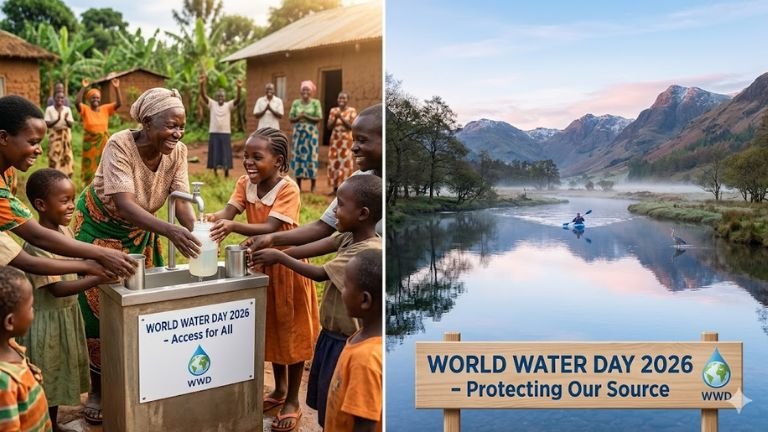
Every year on March 22, the world comes together to observe World Water Day, a global initiative that highlights the importance of freshwater and the urgent need to manage it sustainably. While water is something many of us take for granted, the reality is far more serious for billions of people around the globe.
Water is not just a basic necessity—it is the foundation of life. From drinking and sanitation to agriculture and industry, every aspect of human survival depends on access to clean and safe water. Yet, despite its importance, a staggering 2.1 billion people still live without access to safely managed drinking water. This alarming statistic shows how critical the global water crisis has become.
World Water Day was officially established by the United Nations General Assembly in 1993. Since then, it has been observed annually with a specific theme that focuses on different aspects of water-related challenges. The aim is to raise awareness, inspire action, and encourage governments, organizations, and individuals to work together toward sustainable water management.
The theme for World Water Day 2026 is “Water and Gender.” This theme brings attention to the deep connection between water access and gender equality. In many parts of the world, especially in rural and underdeveloped regions, women and girls are primarily responsible for collecting water for their families.
This daily task often requires them to walk long distances, sometimes for hours, just to fetch water. As a result, girls may miss school, and women may have fewer opportunities for employment or personal development. This not only affects their quality of life but also reinforces existing gender inequalities.
By focusing on “Water and Gender,” the United Nations aims to highlight these challenges and promote solutions that ensure equal access to water for everyone. It emphasizes the need to involve women in water management decisions and to create systems that reduce the burden on them.
However, the global water crisis is not just about access—it is also about management and conservation. Rapid population growth, urbanization, pollution, and climate change are putting immense pressure on water resources. In many regions, groundwater is being overexploited, and natural water bodies are being polluted or destroyed.
Climate change, in particular, is making the situation worse. Changing rainfall patterns, prolonged droughts, and unexpected floods are disrupting the availability of water. These challenges make it even more important to adopt sustainable practices and protect our water resources.
One of the key objectives of World Water Day is to support Sustainable Development Goal 6 (SDG 6), which aims to ensure the availability and sustainable management of water and sanitation for all by the year 2030. Achieving this goal requires collective effort from governments, communities, and individuals.
At an individual level, small actions can make a big difference. Simple habits like turning off taps when not in use, fixing leaks, using water-efficient appliances, and harvesting rainwater can significantly reduce water wastage. Awareness and responsible usage are the first steps toward conservation.
In India, World Water Day March-22-2026 holds additional significance as it is also celebrated as Bihar Diwas. This day marks the formation of the state of Bihar in 1912. While the focus of World Water Day is global, this regional celebration adds cultural importance to the date in India.
Urban areas are also facing increasing water challenges. With growing populations and expanding cities, the demand for water is rising rapidly. Poor infrastructure, mismanagement, and contamination of water sources are further complicating the situation. Without immediate action, many cities could face severe water shortages in the future.
World Water Day is not just about raising awareness for one day—it is a reminder of our ongoing responsibility. Water conservation should become a part of our daily lives. Governments need to implement strong policies, industries must adopt sustainable practices, and individuals must change their habits.
The message is clear: every drop of water counts. What we do today will determine the future of water for generations to come. Ignoring the problem is no longer an option.
As we observe World Water Day 2026, let us take a moment to reflect on our relationship with water. Let us recognize its value, understand the challenges, and commit to making a difference.
👉 Water is life. Saving it today means securing tomorrow.
Also read : Ahobilam Temple – Sacred Land of the Nava Narasimha Temples