

India could soon witness a major transformation in how people use social media. A parliamentary panel has proposed mandatory KYC (Know Your Customer) verification for users across platforms like social media, dating apps, and online gaming services. This recommendation, if implemented, could significantly change the digital landscape in the country.
The proposal comes at a time when concerns around online safety, fake accounts, and cybercrime are rapidly growing. With millions of users actively engaging on platforms daily, the government is now exploring stricter measures to ensure accountability and user protection.
🚨 What Is the Big Proposal?
The recommendation has been made by a parliamentary committee focusing on cybercrime and the safety of women and minors. According to reports, the panel has suggested that all users should undergo KYC verification before creating or continuing to use accounts on digital platforms.
This means users may need to verify their identity using official documents—similar to processes used in banking or telecom services.
The proposal also includes:
- Identity verification for all users
- Age verification to restrict minors
- Periodic re-verification of accounts
- Stricter rules for dating and gaming apps
🎯 Why Is KYC Being Proposed?
The main aim behind this move is to curb misuse of online platforms. Fake profiles, anonymous trolling, cyberstalking, and identity theft have become common issues in India’s digital ecosystem.
The committee highlighted that:
- Fake accounts often enable online harassment and abuse
- Anonymous users make it difficult to track offenders
- Minors are exposed to inappropriate or harmful content
By linking accounts to verified identities, authorities believe it will become easier to trace offenders and reduce cybercrime.
👶 Focus on Children and Women Safety
One of the biggest reasons behind this proposal is the protection of women and minors online.
If KYC becomes mandatory:
- Platforms can verify user age accurately
- Children may be restricted from accessing certain apps
- Harmful content exposure can be reduced
In fact, experts suggest that strict age verification could even act as a digital barrier preventing underage users from joining social media platforms altogether.
This could mark a major shift, especially in a country where millions of teenagers actively use social media daily.
⚠️ What Changes for Users?
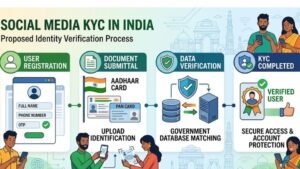
If the proposal is implemented, users may experience several major changes:
1. No More Anonymous Accounts
Users may no longer be able to create fake or anonymous profiles easily. Every account could be linked to a real identity.
2. Mandatory Identity Proof
Signing up for platforms like social media, gaming, or dating apps may require:
- Aadhaar or government ID
- Mobile verification
- Possibly biometric or selfie-based verification
3. Regular Verification Checks
Platforms might be required to periodically re-verify users, especially those flagged for suspicious activity.
4. Stricter Platform Rules
Apps that fail to follow these guidelines could face:
- Heavy penalties
- Licensing restrictions
- Increased government scrutiny
🔐 Privacy Concerns and Debate
While the proposal aims to improve safety, it has also sparked serious concerns around privacy and data security.
Critics argue that:
- Mandatory KYC could lead to mass data collection
- There is a risk of data breaches or misuse
- It may reduce freedom of expression due to loss of anonymity
Experts believe that balancing user safety and privacy rights will be one of the biggest challenges if the rule is implemented.
🌍 Global Trend: Not Just India
India is not alone in considering stricter rules for digital platforms. Many countries are already exploring similar regulations:
- Some nations are pushing for age restrictions on social media
- Others are tightening laws around online identity verification
This shows a growing global trend toward regulated and safer internet ecosystems, especially for younger users.
🧠 What Happens Next?
It is important to note that Social Media KYC in India? is currently just a recommendation, not a law yet. The proposal has been submitted to relevant ministries, and the government will decide whether to implement it fully, partially, or not at all.
If approved, it could lead to:
- New IT rules
- Updated platform guidelines
- Major changes in how Indians access social media
📊 Final Thoughts
The idea of mandatory Social Media KYC in India? is both powerful and controversial. On one hand, it promises a safer online environment by reducing fake accounts and cybercrime. On the other, it raises important questions about privacy, surveillance, and digital freedom.
For users, this could mean a future where social media is no longer anonymous—but more secure.
As the government evaluates this proposal, one thing is clear:
India’s digital rules are evolving, and big changes may be coming soon.
Also Read : 5 Must-Visit Places in India – That Will Make You Fall in Love with Travel!
3 thoughts on “Social Media KYC in India? Government May Enforce Big Rule Soon.”